Sunday, 8 April 2012

Alteration of Screen vs. Print Design


Reading through screen is disturbing as there are many interruptions from other sites. However, readers tend to read faster in print text, there are no direct distractions since wordings occurred only. According to Mucciolo (2009) indicated that, ‘electronic documents are subject to a person’s technology and readers with different computers will be looking at the same content differently...However, print recipients will see things exactly in the same way...,’.

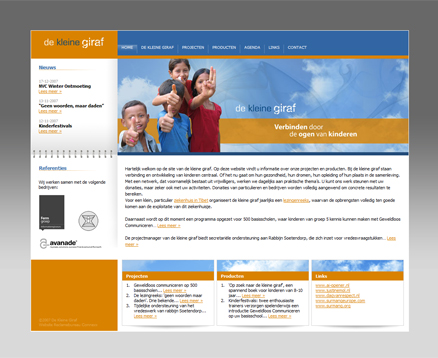
The pictures below are the examples of magazines page and website images:

            Website content page

                      Magazine content page


As we could see above, the screen documents have quick links accessed to related topics. Walsh (2006) mentions that ‘internet sites vary in the modes they use, but they have the potential to combine words and images in complex structures with logos, menu bars, hyperlinks, etc’. It is designate to assist the readers learning, to attract and to maintain interest with the layout decorations (Walsh, 2006).

These are the differences between print vs. screen documents through Nielson’s theory of Print Design vs. Web Design (1999):

      1)      Dimensionality
Print design:-
*2-dimensional, with much attention paid to layout.

Screen Design:-
*1-Dimensional and N-Dimensional
*a scrolling experience

      2)      Navigation
Print Design:-
*mainly consists of page-turning which is limited

Screen Design:-
*users able to ‘look and feel’ in the website
*guide users to learn and search for extra resources through links
                                                                                                                                                         
This was supported by Nielson’s theory of Writing Style for Print vs. Web (2008):

Narrative vs. Actionable Content
Print Design:-
*spice up linear narrative with anecdotes and individual examples
*narrative exposition calls for well-crafted

Screen Design:-
*users need actionable content, to view other resources
*information carrying key-words

In conclusion, both readings design are still practising today. However, screen design is assumed to be a better choice as it fits to the technology world today and it is more convenient to the readers with the provision of extra information or knowledge.

                                                                                                                        (295 words)


References:
Mucciolo, T 2009, ‘Print vs. Screen,’ MediaNet, viewed 6 April 2012, < http://medianet-ny.com/wordpress/print-vs-screen/>.

Nielson, J 1999, ‘Differences between Print Design and Web Design,’ Alertbox, viewed 6 April 2012, < http://www.useit.com/alertbox/990124.html>.

Nielson, J 2008, ‘Writing Style for Print vs. Web,’ Alertbox, viewed 6 April 2012, < http://www.useit.com/alertbox/print-vs-online-content.html>.

Walsh, M 2006, ‘The Textual Shift: Examining the reading process with print, visual and multimodal texts,’ Australian Journal of Language and Literacy, vol.29, no.1, pp. 24-37.


Thursday, 5 April 2012

The Emergence of 'New' Media.

2 d)
The emergence of new media in our generation is growing rapidly that makes changes to the communication world. For instance, we are surrounded with the convenience of communicating through social media such as YouTube, Facebook, Twitter, BlogSpot and more. These are all the tools to communicate easily with various people as compared to the old media which could only communicate with one-to-one communication. 

Both of the picture illustrated is an example of ‘old’ and ‘new’ media:
Source: http://www.cba.org/cba/practicelink/solosmall_clients/old_new.aspx
'NewMedia'   


As we know, the social networking today is well-known as the main communication function. The society relies on all the social media to get interacted with others either in short or long distances. It is also one of the advantages which we could easily get connected with each other within a short period of time like few minutes while ‘old’ media need a longer time like days to reach.

Personally, I would choose Facebook as the communication tool to replace the old media world. It is a social media tool where people get connected daily. As Naughton (n.d.) claims that ‘ownership of the means of cultural production has passed from those who could afford their high capital cost in the old ecosystem to just about anyone who has a computer, some appropriate software and an internet connection’. This has examines that ‘new’ media ‘Facebook’ evolves in the tradition media where it could be modify as an advertising, journalism or marketing tools to reach their audience.

In conclusion, the evolution of ‘new’ media era has overcome the sequence of ‘old’ media. It replaces all the ‘old’ media techniques by improving the usage with more convenient ways. It also helps the society to have an easier life and gets updated easily to the world.

                                                                                                            (275 words)


 References:
Naughton, J (n.d.), ‘Blogging and the Emerging Ecosystem,’ viewed 5 April 2012, < http://reutersinstitute.politics.ox.ac.uk/fileadmin/documents/discussion/blogging.pdf>.


   'Old' Media
~tradition social media
~such as Newspaper, Radio, Television...


Saturday, 24 March 2012

Blogging Community


Recently, the term of ‘online community’ implied a community who interacted online within some bounded set of technologies (White, 2006). Blogging communities are created for the users to have shared information or ideas in between the social connection provided. According to Kinkeldei (2007) indicates that ‘Blog communities carry the idea of a social network at their root, in the sense that they strengthen communication and connections amongst different groups of people with a similar mindset’.

Ways to create blog communities by Yaro Starak- The Blog Traffic King (2006)
·         Create a mentoring program where your more experienced readers help out the newbies.
·         Invite readers to submit something for review and have your community leave comments to help out.
·         Run a competition and have your community vote to decide the winners.
·         Create a group blogging project and invite all the bloggers in your industry to participate. Focus on your niche topic area in order to keep things relevant.
·         Conduct an interview of someone reasonably famous in your industry and ask your readers to submit questions to ask.

White (2006) has come out with 3 types of blogging communities:

  
                   i.            The Single Blog/ blogger Centric Community

  It is run by an individual which is also the blog ‘owner’ of the community which controls within rules. There may be several of authors designing and writing post to the blog but it is all under the same and only ‘one’ blog.
 

             ii.            The Central Connecting Topic Community

It is run by a group of people who shared the same topic or interest in the blogs which connects the members together. Both power and identity of this community is kept privately.

              iii.            The Boundaried Community

It is hosted in a single site or platform by the collections of blogs and blogs readers. Often these communities are link to the social media tools.

I would prefer the Central Connecting Community model as my choice. An example for Central Connecting Community is the ‘Xanga.com’ blogging community. It is a place for the bloggers and the readers to share their same interest and topic through this community.


References:
Kinkeldei, B 2007, ‘Forging connections and Promoting growth Through Blog Communities’, 21 Publish, viewed 24 March 2012, <http://www.21publish.com/pub/21publish/blogging-whitepaper.pdf>.

Starak, Y 2006, ‘How to Create a Community at Your Blog: Blog Traffic Tips Weekly Newsletter’, Entrepreneurs-Journey.com, viewed 24 March 2012, <http://www.entrepreneurs-journey.com/newsletters/how-to-create-a-community-at-your-blog/>.

White, N 2006, ‘Launching a New Paradigm for Online Community?’, Blogs and Community, viewed 24 March 2012, <http://kt.flexiblelearning.net.au/tkt2006/edition-11-editorial/blogs-and-community-%E2%80%93-launching-a-new-paradigm-for-online-community>.

Friday, 23 March 2012

Analogy of Taxonomy Blogs & Preferred Bloggers Contrivance


2b) 
          Blog-taxonomy is a review on organizing blogs specifically for two types of readers on the internet which are the human and search engines.          
According to the Media Report entitle ‘A Taxonomy of Blogs’ published on 25th September 2008, an Australia freelance journalist, Margaret Simon’s has declared what ‘blog’ means.
There are 9 different types of blogs classified by Margaret Simon’s through various online pages.
 Ø  Pamphleteering Blog
 Ø  Digest Blog 
 Ø  Advocacy Blog
 Ø  Popular Mechanics Blog
 Ø  Exhibition Blog
 Ø  Gatewatcher Blog 
 Ø  Diary Blog
 Ø  Advertisement Blog
 Ø  News Blog
 Each and every type of the blogs above is clearly annotated through the interview. For instance, Diary Blog and the Advertisement Blog are the common blogs that bloggers and readers favourite. Moreover, political issues blogs such as the Pamphleteering Blog and Advocacy Blog are apparently differentiated.

On the other hand, Technorati’s State of the Blogosphere in 2011 report has stated the evolution of blogging rapidly increasing as compared in the year of 2010. According to Technorati (2011) report, it is investigated based on the interest and justification of blogging.
Technorati’s blog is differentiated into 5 categories based on the result shown.

v  Hobbyists
v  Professional Full-Timers
v  Professional Part-Timers
v  Corporate
v  Entrepreneurs

The highest percentage of bloggers categorised in is the Hobbyist which is also known as the backbone of the blogosphere which represents 60% of the respondents in the survey conducted (Technorati, 2011). These bloggers mainly blogs for ‘personal musing’ as they tend to express their feelings and thoughts through blogging. It is also to exhilarate their personal satisfaction. Furthermore, the remaining four types of bloggers focused on the income based as they get paid for it.

In comparison of both the authors Simon (2008) and Technorati (2011) through blogs classification, I would prefer Simon’s scheme. This is because Simon’s technique of blogs classification is easier to apply and recognize. As compared to Technorati’s blogosphere, there is limited space to understand the whole concept of blogs. Moreover, the format portrayed by Simon is in a spoken language which is simpler to absorb the meanings behind it. In contrast, Technorati’s uses research form to present which will have a need to digest the investigation thoroughly.  


References:
Simons, M 2008, ‘Toward A Taxonomy of Blogs’, viewed 23 March 2012, <http://www.abc.net.au/radionational/programs/mediareport-1999/a-taxonomy-of-blogs/3186686>.
Technorati 2011, State of the Blogosphere 2011, Australia, viewed 23 March 2012, <http://technorati.com/social-media/article/state-of-the-blogosphere-2011-introduction/>.

Sunday, 18 March 2012

Blogging Issues


 2 a)     
       Nowadays, people are used to online networking to complete tasks in various ways such as blogging. This is a research from Technorati’s State of the Blogosphere in 2011 chronicle.  
The appearance of blogosphere distinguishes the interest and satisfaction or income supplementary as well as a tool to advertise and communicate. In addition, hobbyist stands the highest percentage of blogging reasoning as compared to others. They are popular to share their experience expertise personally. Most of the people aim to blog for personal musings rather than on business and technology used like entrepreneurs and corporate bloggers.
Overall, United States holds the highest percentage of bloggers worldwide. Bloggers used social media such as Facebook or Twitter to access their blog to capture society’s attention and interest. As Naughton (2006) claims that media environment is a need to survive and develop. Hence, most of the hobbyist or especially the entrepreneurs used media to receive information and feedback from what they have blogged.
Moreover, blogging is beneficial when it is in proper usage. For instance, Professional part-and-full-timers and corporate bloggers stated blogging as their primary income including as a job supplier. It is proved in the research stated there is 37% of professional part-and-full-timers blog for income sources (Technorati, 2011).  While Entrepreneurs blog for the usage of attracting clients towards their businesses.
Produsage.org (2008) defines that in collaborative communities the creation of shared content takes place in networked. This explains the importance of a blogger having a reader to complete the cycles of blogging issue. 
                                                                           (251 words)

References:
           
Naughton, J, Blogging and the emerging media ecosystem, United Kingdom, viewed 18 March 2012, <http://reutersinstitute.politics.ox.ac.uk/fileadmin/documents/discussion/blogging.pdf>.
Produsage.ord 2008, Produsage: An introduction, viewed 18 March 2012, <http://produsage.org/node/27>.      
Technorati, 2011, State of the Blogosphere 2011, Australia, viewed 18 March 2012, <http://technorati.com/social-media/article/state-of-the-blogosphere-2011-part1/>.


Blogging Aspiration


The intention of my blog is to have a clearer understanding on the publishing affair and the themes of designated concepts to capture attention and concentration. It is the creation of ideas with variety of formations such as colours, tone, music, text font and so to the audience. (48 words)